

How Stacking Tire Racks Improve Warehouse Efficiency For Bulk Tire Storage
May 20, 2026
Leave a message
Managing thousands of tires inside a warehouse can quickly create operational problems. Tires stored directly on the floor consume valuable space, complicate inventory management, and increase handling risks. For businesses handling high-volume inventory, a professional stacking tire rack system offers a more efficient and scalable storage solution.
Stacking tire racks are industrial storage systems designed to safely store and organize large volumes of tires in warehouses, distribution centers, and logistics facilities. Steel tire racks maximize vertical storage space, improve inventory handling efficiency, and protect tires from deformation during long-term storage. Foldable and detachable tire racks are especially popular in B2B operations because they reduce transportation costs, optimize warehouse space, and simplify large-scale tire management.
Modern warehouses require more than basic storage. Businesses need systems that improve workflow efficiency, reduce labor costs, support forklift operations, and adapt to changing inventory demands. This is why industrial tire storage systems have become increasingly important for wholesalers, manufacturers, logistics providers, and tire distributors worldwide.
What Are Tyre Storage Racks Used For?
Tyre storage racks are specialized industrial storage systems designed to hold and organize tires safely in commercial and warehouse environments. Unlike traditional shelving or floor stacking, these racks are engineered specifically for the size, weight, and shape of tires.
In large warehouses, improper tire storage often leads to wasted space and damaged inventory. Tires stacked directly on the floor may become unstable, difficult to access, and harder to track. This problem becomes more serious when businesses manage thousands of SKUs or seasonal tire inventory.
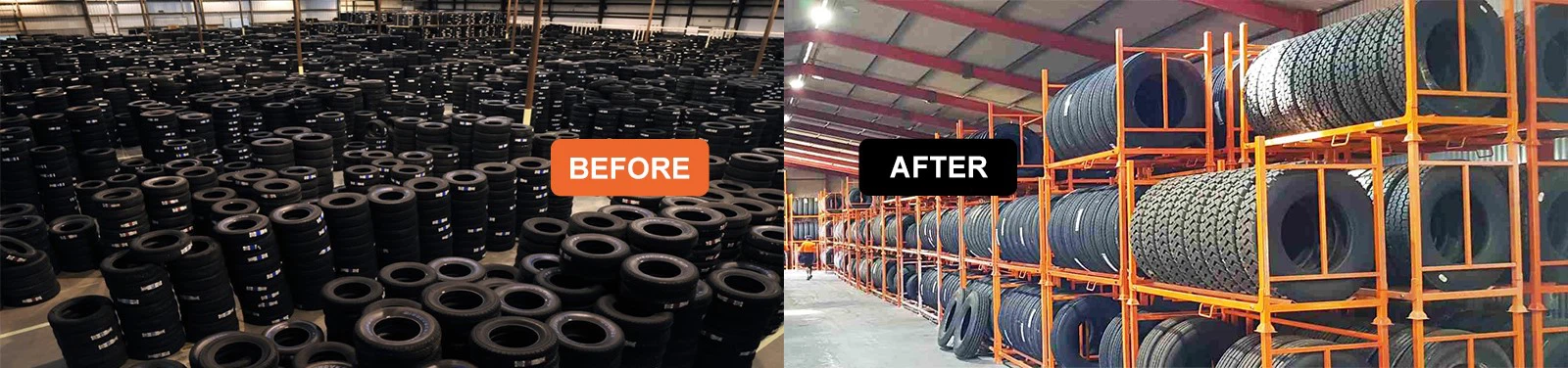
A professional tire warehouse storage system helps companies:
- Maximize warehouse storage capacity
- Improve inventory organization
- Simplify loading and unloading
- Reduce product damage
- Enhance warehouse safety
- Improve forklift accessibility
For B2B operations managing large volumes of tires, efficient storage directly impacts operational costs and productivity. This is why heavy duty tire rack systems are widely used across modern logistics facilities.
What Is a Stacking Tire Rack?
A stacking tire rack is a modular storage solution designed to allow multiple racks to be stacked vertically using forklifts. This design significantly increases warehouse storage density without requiring permanent shelving installations.
Unlike static warehouse shelving, stackable tire rack systems provide greater flexibility. Warehouses can adjust storage layouts according to inventory changes, seasonal demand, or operational requirements.
Most stacking tire racks include:
- Heavy-duty steel frames
- Forklift access points
- Stackable corner posts
- Detachable or foldable structures
- High load-bearing capacity

These pallet style tire racks are commonly used in:
- Tire distribution centers
- Automotive manufacturing plants
- Logistics warehouses
- Wholesale tire storage facilities
Why Stacking Design Matters in Modern Warehouses
Warehouse space is expensive. In many industrial regions, storage costs continue to increase every year. A stackable tire rack system allows businesses to use vertical space more effectively while maintaining organized inventory flow.
Stacking designs also improve forklift efficiency. Operators can quickly move large quantities of tires without manually reorganizing inventory. This reduces labor costs and speeds up warehouse operations.
For companies storing bulk tire inventory, warehouse space optimization can directly improve profitability.
Why Steel Tire Racks Are Better for Industrial Storage
Steel tire racks are widely preferred in industrial environments because of their durability and structural strength. Compared with lighter storage materials, steel offers superior performance for heavy-duty applications.
A professional steel tire rack is designed to withstand:
- Heavy tire loads
- Frequent forklift handling
- Long-term warehouse use
- High stacking pressure
- Industrial transportation environments
Many manufacturers also use powder-coated steel tire rack designs to improve corrosion resistance and increase service life.
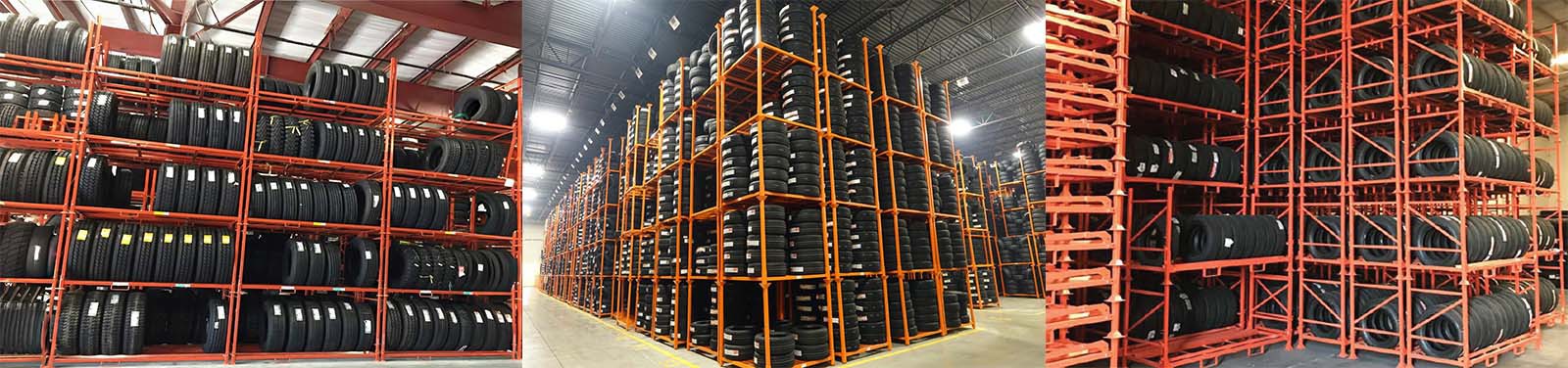
For B2B buyers purchasing 50 or more racks, durability is critical. Frequent rack replacement increases operational costs and disrupts warehouse efficiency. Investing in high-quality metal tire racks helps businesses reduce maintenance expenses over time.
Steel Tire Rack vs Traditional Storage Methods
Traditional tire storage methods often involve stacking tires directly on pallets or warehouse floors. Although this may appear inexpensive initially, it creates multiple long-term problems.
Floor storage commonly results in:
- Poor inventory visibility
- Increased handling time
- Higher product damage rates
- Reduced warehouse capacity
- Safety hazards for workers
By comparison, industrial tire storage systems provide organized storage layouts that improve workflow efficiency and safety compliance.
How Much Weight Can a Metal Tire Rack Hold?
The load capacity of a metal tire rack depends on several factors, including rack dimensions, steel thickness, structural design, and stacking configuration.
Most industrial heavy-duty tire rack systems are engineered to support hundreds or even thousands of kilograms per level. However, load requirements vary depending on tire size and warehouse applications.
Professional manufacturers typically customize racks according to customer requirements such as:
- Passenger car tires
- Truck tires
- OTR tires
- Agricultural tires
- Performance tire storage
Factors That Affect Rack Capacity
Several technical factors influence the performance of a stackable tire rack system:
1. Steel Thickness
Thicker steel generally provides stronger load-bearing performance and improved durability.
2. Rack Dimensions
Larger racks may require reinforced structural supports to maintain stability.
3. Tire Size and Quantity
Larger commercial tires place greater stress on storage systems than standard passenger tires.
4. Stacking Height
Higher stacking configurations require stronger engineering and safety considerations.
For large-scale operations, businesses should always request technical load testing data from manufacturers.
[Placeholder Resource Link: Tire Rack Load Capacity Specifications]
Can Stacking Tire Racks Save Warehouse Space?
Warehouse density optimization is one of the biggest advantages of stacking tire racks. Instead of using valuable floor space inefficiently, businesses can maximize vertical storage capacity.
In many warehouses, stackable tire rack systems can significantly improve storage efficiency compared with floor stacking methods.
Benefits include:
Better warehouse organization
Increased storage density
Faster inventory access
Reduced aisle congestion
Improved forklift movement
For businesses storing seasonal tire inventory, efficient space utilization is especially important. During peak demand periods, warehouse capacity often becomes a major operational challenge.
Improving Tire Inventory Management
An organized tire inventory management system improves operational accuracy and efficiency.
With industrial tire racks, warehouse teams can:
- Identify products more quickly
- Improve stock rotation
- Reduce handling errors
- Minimize product deformation
- Track inventory more effectively
This is particularly valuable for wholesalers and distributors managing multiple tire brands and sizes.
Why Foldable Tyre Racks Are Popular in Logistics Operations
Foldable tyre racks have become increasingly popular because they offer both storage efficiency and logistics flexibility.
When empty, foldable racks can collapse into compact structures, reducing storage and transportation space requirements.
For global exporters and importers, this creates significant logistics advantages.
Transportation and Export Advantages
International shipping costs are heavily influenced by container space utilization. A collapsible tire rack helps businesses reduce shipping expenses by optimizing container loading efficiency.
Benefits include:
- Lower return shipping costs
- Reduced empty rack storage space
- Improved warehouse flexibility
- Easier international transportation
Foldable designs are especially useful for seasonal inventory operations where storage demands fluctuate throughout the year.
Many logistics companies now prefer portable tire rack systems because they support temporary storage setups and flexible warehouse layouts.
What Are the Benefits of Detachable Tire Racks?
Detachable tire racks are designed with removable components that simplify transportation, maintenance, and storage.
Compared with welded fixed-frame structures, detachable systems offer greater adaptability for B2B warehouse operations.
Key advantages include:
- Easier assembly and disassembly
- Lower transportation costs
- Simplified maintenance
- Flexible warehouse configurations
- Easier component replacement
For large-volume buyers, detachable tire rack systems can also improve long-term scalability.
If warehouse layouts change, modular rack systems can be reconfigured without replacing the entire storage system.
This flexibility is especially valuable for fast-growing businesses and expanding logistics networks.
Which Industries Use Industrial Tire Racks?
Industrial tire racks are widely used across many sectors that manage large tire inventories.
Common industries include:
Tire Wholesalers
Wholesale businesses require bulk tire storage rack systems capable of handling high inventory turnover efficiently.
Automotive Manufacturers
Vehicle manufacturers often use stackable tire rack systems to organize production inventory and improve logistics flow.
Logistics and Distribution Companies
Large logistics centers rely on industrial tire storage systems to maximize warehouse density and simplify inventory handling.
Tire Retail Chains
Retail distributors use portable tire rack systems to improve storage organization across multiple locations.
Tire Recycling and Retreading Facilities
Specialized storage systems help organize used tires safely and efficiently.

Why B2B Buyers Prefer Stackable Tire Rack Systems
B2B buyers prioritize long-term operational value rather than short-term cost savings.
A professionally engineered warehouse tire rack solution offers:
- Better scalability
- Lower labor costs
- Improved warehouse productivity
- Reduced inventory damage
- Better operational efficiency
For businesses purchasing more than 50 racks, consistency and manufacturing reliability are also critical factors.
How to Choose the Right Tire Storage Rack
Selecting the correct tire storage solution requires careful evaluation of warehouse requirements and operational goals.
Important considerations include:
Load Capacity Requirements
Businesses must evaluate the weight and quantity of stored tires.
Warehouse Dimensions
Ceiling height and aisle spacing affect rack design and stacking configurations.
Forklift Compatibility
Proper forklift access improves handling efficiency and operational safety.
Foldable vs Fixed Structure
Foldable tyre racks offer greater logistics flexibility, while fixed systems may provide higher structural rigidity.
Surface Finish
Powder-coated or galvanized finishes improve corrosion resistance in demanding environments.
Questions Buyers Should Ask Before Ordering 50+ Racks
Before placing large B2B orders, buyers should confirm:
- Manufacturing capacity
- MOQ requirements
- OEM/ODM customization options
- Engineering support
- Lead times
- Export packaging standards
- Quality inspection procedures
These factors directly affect long-term operational performance and supply chain reliability.
Why YSTRAK Is a Reliable Tire Rack Manufacturer for B2B Buyers
For companies seeking reliable warehouse tire rack solutions, choosing the right manufacturing partner is just as important as selecting the right product.
YSTRAK focuses on industrial-grade tire storage systems designed for demanding warehouse and logistics environments.
The company supports B2B customers with:
- OEM and ODM manufacturing
- Custom rack engineering
- Bulk order production
- Export packaging solutions
- Professional quality control
- Flexible storage system customization
Whether businesses require steel tire racks, foldable tyre racks, detachable tire racks, or custom stackable tire rack systems, YSTRAK can provide tailored solutions based on operational requirements.
Large-scale buyers often prioritize durability, consistency, and logistics efficiency. By combining heavy-duty steel construction with flexible storage designs, YSTRAK helps customers improve warehouse performance while reducing long-term storage costs.
Conclusion
Efficient tire storage is essential for modern warehouse operations. As inventory volumes increase, traditional floor storage methods become inefficient, unsafe, and costly.
A professional stacking tire rack system improves warehouse organization, increases storage density, protects tire inventory, and supports scalable logistics operations. Whether businesses need steel tire racks, foldable tyre racks, or detachable tire racks, investing in the right industrial storage solution can deliver long-term operational benefits.
For B2B buyers managing bulk tire inventory, choosing a reliable manufacturer and a durable storage system is a practical investment in warehouse efficiency and future business growth.